


PressMare
How Quantum Sails Turns Racing Feedback Into Better Sails
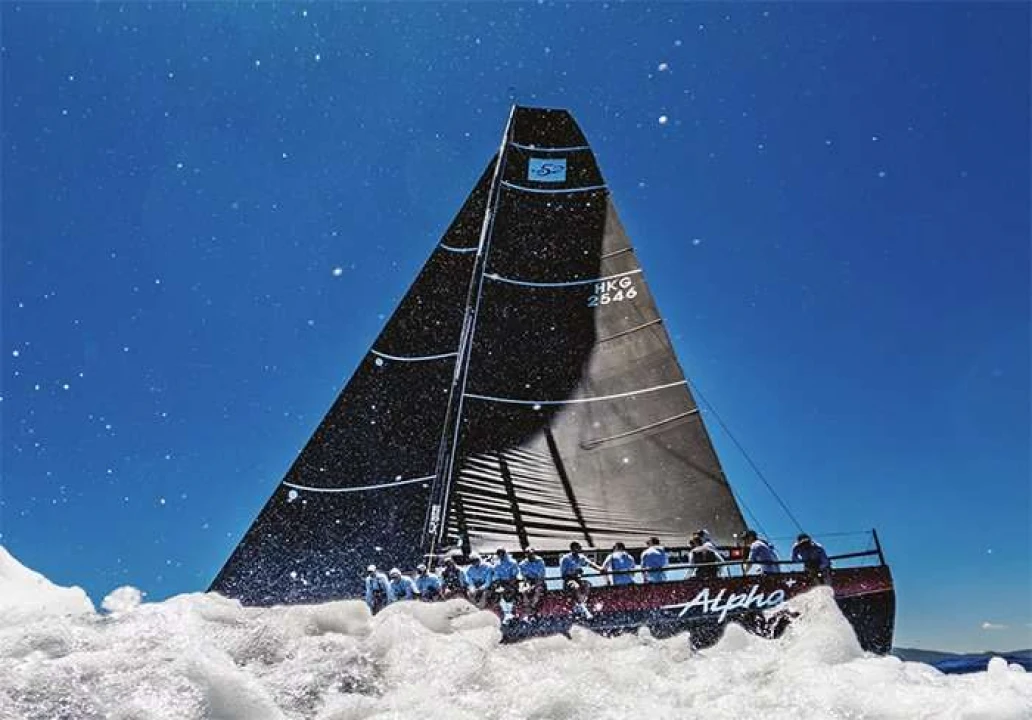
A racing sail built in 2026 can look almost identical to one built four years earlier. When hoisted side by side, few sailors could tell them apart. Yet beneath the surface, the new sail may be an entirely different product
The biggest advances in sailmaking are rarely visible. They happen in the chemistry of adhesives, the mix of fibres and thousands of small design refinements informed by countless hours on the water. Quantum Sails has built its development philosophy around this continuous evolution, using every customer, every regatta and every design cycle to make the next sail measurably better than the last.
Every outing is an R&D session
For Quantum, product development begins on the water. Every training session, Wednesday night race and offshore passage generates another stream of information for the company to analyse. Sail consultants return with photographs, observations and customer feedback on everything from handling characteristics to durability.
Together, that data becomes the starting point for the next iteration. ‘We’ll sit down as a team and figure out how to turn all that insight into better sails, whether that’s refining a sail shape or developing a new material,’ Quantum Sails vice president of design Doug Stewart explains.
One-design racing provides the purest environment for this process. With identical boats competing in tightly matched fleets, even subtle differences in sails quickly become apparent, creating an unusually effective feedback loop between sailors and designers.
Over the past year, a series of incremental refinements to Quantum's J/70 sails emerged directly from this process, and were first put to test aboard Wild Card and T2 against a highly competitive 33-boat fleet at the Helly Hansen Sailing World Regatta Series in Annapolis, Maryland. These Quantum-powered teams achieved first and fourth places respectively overall. The success continued at the 2026 J/70 Canadian National Championship with the Quantumpowered 7th Heaven team winning seven races and securing the title.
The same philosophy extends beyond the racecourse. While the priorities of a performance cruiser may differ from those of a professional race team, the development process remains the same.
‘Our sail consultants are always talking to our customers and translating their needs based on their objectives and expectations,’ says Quantum technical co-ordinator Pablo Campano. ‘That then becomes the DNA of our next iteration of products.’
Changing the ingredients
Listening to customers ultimately led Quantum Sails towards one of the company’s most significant strategic decisions: taking control of the materials themselves. Traditionally, sailmakers buy films, adhesives and fibres from specialist suppliers before combining them into finished sails. Quantum instead has developed much of that capability in house, hiring specialists and building its own team to formulate proprietary materials and products.
‘We have invested in our technology team and infrastructure to ensure we have control of the raw materials and processes and can build what customers need,’ Campano explains. ‘Instead of being reliant on pre-made, industry-standard products, we can think outside the box and develop new products that no one else in the sailmaking industry is using.’
This shift has given Quantum the freedom to solve customer problems proactively, rather than working within the limitations of commercially available materials. It gives Quantum control over a much larger development chain, from customer feedback and aerodynamic modelling to material chemistry, manufacturing and on-the-water validation, allowing each part of the process to inform the others.
VX Surfaces was the first product Quantum developed entirely in house, addressing a fundamental weakness in membrane sail construction: the bond between the polyester surface film and the internal structural matrix. PET film offers exceptional dimensional stability, but when that interface begins to break down under repeated load, flex, moisture and heat, the laminate loses its integrity long before the fibres themselves have reached their limit.
Quantum's proprietary QTec bonding system addresses the problem at the material level. Its resin chemistry is formulated to achieve more complete wetting of the surface and create a stable interphase layer, reducing the microscopic voids where failures typically begin. The result is a stronger, more unified composite in which the film, fibres, tapes and structural reinforcements work together, improving fatigue resistance, abrasion durability and long-term shape retention.
VX is intentionally a platform rather than a finished development. Significant development is already under way toward the platform's next major evolution, underscoring Quantum’s capability to continually refine the chemistry and construction rather than waiting for an external supplier to introduce its next material.
Development with purpose
Material development has become one of the fastest-moving areas of sailmaking. With an ever-expanding range of fibre combinations available, there are countless ways to build a sail. The challenge is deciding which direction to take.
At Quantum, the answer always starts with the customer. ‘We don’t feed our technology to our customers,’ says Campano. ‘We listen to what they’re telling us and that’s what we go back to the drawing board with.’
That customer-led approach gave rise to Electra, Quantum’s latest tri-radial racing platform. Rather than treating panelled construction as a step down from membrane technology, Quantum used its Grand Prix design intelligence to rethink what a tri-radial sail could deliver.
Designed with iQ Technology, Electra translates membrane-derived aerodynamic shapes, load-path analysis and fibre mapping into a lightweight dualfibre structure. High-strength aramid or carbon warp fibres carry the primary loads, while a low-stretch UPE x-ply provides off-axis stability. The result is membrane-like performance – responsive acceleration, stable flying shapes and efficient load distribution – in a versatile tri-radial platform engineered for round-the-buoys, inshore and distance racing.
The objective was not simply to make high-performance sails more accessible. It was also a way to preserve more of the precision and shape stability racers associate with a membrane while offering a different balance of versatility, durability and campaign value.
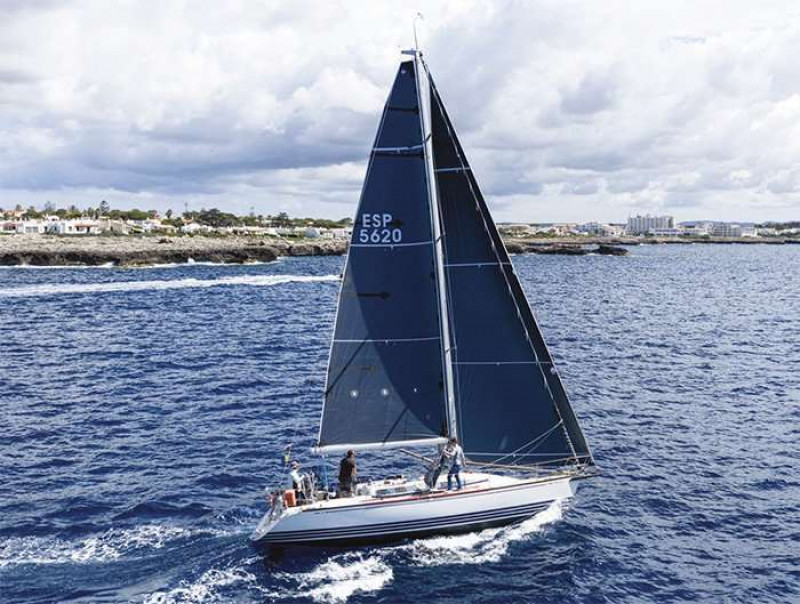
Electra’s potential became apparent aboard Yabadaba Too, a 30-year-old X-382 whose sailplan Quantum radically reworked. The traditional large genoa and smaller mainsail were replaced with a larger square-top main and a single furling jib, creating a more efficient and easily handled configuration. ‘We wanted to think outside the box, and Electra gave us the confidence to explore a completely different sailplan,’ says Quantum sail consultant Christian Fornés.
With its new sail wardrobe, Yabadaba Too finished third at the ORC DH European Championship and second at the Spanish Championship qualifier before winning the X-Yachts Spanish Gold Cup 2026, topping a 44-boat fleet that included much newer boats. The project shows how membranederived design thinking, modern materials and a willingness to reconsider the entire system can transform the performance of an established platform.
The same development process also revealed a different need: a sail capable of delivering performance-oriented shape and handling over the much longer service life demanded by cruising and mixed-use programmes.
As a result, Quantum developed Venture, a lightweight tri-radial platform for performance cruising and mixed racing programmes. Developed through the same iQ design environment, Venture uses load-aligned panel layouts and carefully selected fibre combinations to deliver a stable, responsive shape with less weight than conventional cruising laminates. Its structure is engineered to withstand repeated furling, handling and extended use without sacrificing the efficiency that sailors expect from a performance sail. For racers balancing competitive ambitions with offshore mileage or cruising requirements, Venture demonstrates how racing-derived design intelligence can improve durability and service life without accepting a heavy, unresponsive sail.
VX, Electra and Venture represent different outcomes of the same development philosophy: identify a genuine customer need, develop the technology to address it and continue refining the solution long after launch. The benefits appear differently across the spectrum: fractions of a knot and repeatable shapes for a racing programme; easier handling, lower weight and longer service life for a performance cruiser; and better value over time for both.
Closing the loop
Before any new material reaches production, it is validated in Quantum’s proprietary iQ Technology design environment. Originally developed for Grand Prix racing programmes, iQ allows designers to model sail shape, material behaviour and aerodynamic loads long before a sail is manufactured.
‘The magic is being able to reproduce any element of the boat and see all the forces, reactions and everything,’ Quantum design and technology expert Joan Subirats explains. ‘What we are doing is virtual sailing.’
The system has become an increasingly important part of Quantum’s development process, allowing designers to compare different sail shapes, evaluate new materials and understand how subtle design changes will affect performance before committing them to production.
iQ was central to the development of both Electra and Venture, allowing Quantum to model and refine panel layouts, fibre orientation, aerodynamic shape and material response before the first sail was built.
The process does not replace sailing. Instead, it allows promising ideas to be refined before they ever reach the water, reducing uncertainty and accelerating the next cycle of development.
Always improving
In many areas of sailing, progress is easy to spot. New hull forms, foils or rig configurations make immediate headlines. Sailmaking tends to evolve more subtly. For Quantum, that’s exactly the point.
Customers should expect that the sail they order today is measurably better than one built from the same product platform several years earlier. The improvements may be invisible but they are the result of countless conversations on the dock, thousands of miles on the water, advances in material science and continuous digital validation.
In an industry that has often relied on established methods and incremental change, Quantum believes its greatest differentiator is its ability to react quickly to customer feedback and feed it into a development engine that never stops running. Most of that process remains invisible once the sail is hoisted. The difference is in how precisely it performs and how long it continues to do so.
Source: Original article on PressMare ↗