


Superyachts in Sardinia: 3.176 Vessels Recorded in Summer 2026
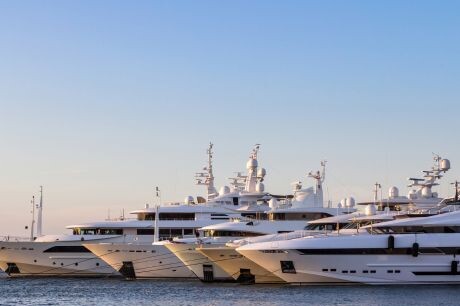
The international superyacht sector is strengthening its presence in Sardinia. Between June and August 2026, 3,176 unique superyachts over 24 metres long were recorded in the waters of Gallura—up 9.97% from 2,888 in 2025 and 27.29% from 2,495 in 2024.
This growth is documented by a study conducted by the Cipnes Gallura–UniOlbia Research Centre and presented at the Cannes Yachting Festival. The initiative forms part of the Regional Plan for the Internationalisation of Sardinia’s Nautical Industry, funded by the Region of Sardinia and implemented by Cipnes Gallura to support the regional supply chain, promote Made in Sardinia products and attract new industrial investment.
The study does more than measure yacht traffic. Through an analysis of 291 superyachts, it also examines the fleet’s size and value, countries and shipyards of construction, publicly attributed ownership and the owners’ main business sectors.
Steady Growth Throughout the Summer
As early as June, 1,139 vessels were detected, compared with 978 in 2025 and 825 in 2024. The figure rose to 1,870 in July, an increase of 11.8% year on year, before exceeding two thousand in August: 2,039 superyachts, 9.4% more than in the previous year.
The monthly figures should not be added together, as the same vessel may have been present during more than one period. The total of 3,176 instead corresponds to the different MMSI codes recorded over the entire quarter, once all duplicates had been removed.
The analysis is based on data provided by the Northern Sardinia Maritime Directorate through Pelagus, the Italian Coast Guard system that uses AIS signals. The datasets initially included vessels classified as pleasure craft and were subsequently checked to limit the study to yachts over 24 metres.
The research was conceived and coordinated by Guido Piga, Head of Communications and of the Cipnes Gallura–UniOlbia Research Centre, with technical support from the Cipnes Gallura Digital Transition Office.
New Routes Across Maritime Gallura
Porto Cervo, Cala di Volpe and Pevero remain among the main areas for superyacht concentration and anchorage. However, the phenomenon is no longer confined to the historic destinations of the Costa Smeralda: yacht traffic is increasingly extending towards Cannigione, Porto Rotondo, the Gulf of Olbia, Golfo Aranci and the Tavolara–San Teodoro marine area.
La Maddalena recorded the passage or presence of 2,866 vessels, while 2,581 were detected in the Costa Smeralda and 2,285 in the Porto Rotondo area. These were followed by Santa Teresa–Bocche di Bonifacio with 1,872, Tavolara with 1,638, the Gulf of Olbia with 1,305 and Cannigione with 1,300.
Some of the strongest increases concern these emerging areas. Over one year, Cannigione grew by 19.2%, Olbia by 16.1% and Tavolara by 13%. Compared with 2024, both Olbia and Tavolara recorded a 48.5% increase, while Cannigione reached 42.5%.
The territorial figures include both anchored vessels and yachts in transit. La Maddalena’s leading figure therefore also reflects the archipelago’s position along international routes, as is the case for the Strait of Bonifacio. The same yacht may also cross several areas and be detected in each of them.
“The presence of superyachts is no longer limited to the areas of the Costa Smeralda that have traditionally attracted the greatest numbers, but is spreading throughout maritime Gallura,” said Antonio Loriga, Vice-President of Cipnes Gallura. “The Regional Plan aims to support this development through ports, services, infrastructure and skills capable of increasing and distributing the economic benefits generated by the nautical industry.”
Inside the Fleet: Size, Shipyards and Value
A dedicated phase of the research identified 291 superyachts, corresponding to 9.2% of all vessels recorded. The sample has an average length of 61.7 metres and a median length of 57 metres.
The largest category comprises yachts between 40 and 59 metres, with 123 vessels, followed by 99 units measuring between 60 and 89 metres. Overall, 88% of the analysed fleet is at least 40 metres long, while almost half reaches or exceeds 60 metres. Thirty-four yachts are at least 90 metres long, including nine gigayachts measuring 120 metres or more.
At 160 metres, Blue is the largest vessel in the sample. It is followed by A+ at 147 metres, Luminance at 145, Dragonfly at 142 and Yas at 141.
Public valuations were also available for 288 vessels. Their combined estimated value amounts to at least 19.2 billion dollars, with an average of 66.8 million dollars per yacht. The 56 vessels valued at 100 million dollars or more account for over 11.8 billion dollars—more than 61% of the total—while 17 are estimated to be worth at least 250 million dollars. These figures are indicative estimates drawn from publicly available sources, rather than certified valuations.
Italian Shipbuilding Leads the Ranking
Italy ranks first among the countries of construction, with 106 superyachts and a 36.4% share. The Netherlands follows with 94 vessels, equal to 32.3%, while Germany ranks third with 33 yachts, or 11.3%. Together, the three leading national industries built more than 80% of the fleet examined.
Benetti heads the Italian representation with 25 yachts, followed by Perini Navi with 14. Baglietto, Codecasa and Sanlorenzo account for seven vessels each, followed by Overmarine, CRN, Rossinavi, Columbus, Mondomarine and Wally.
Each manufacturing system displays different characteristics. Italy leads in terms of yacht numbers and breadth of supply, with an average length of 53.3 metres. Yachts built in the Netherlands average 63.6 metres, while German production focuses on larger vessels, averaging 90.1 metres.
Sardinia is also beginning to establish its place within this value chain. High-performance tenders built on the island already operate alongside international superyachts, demonstrating the potential of a regional manufacturing industry geared towards global markets.
An International Community of Entrepreneurs and Investors
The United States is the country most frequently associated with the identified owners, accounting for 53 yachts. Italy ranks second with 36 vessels, followed by the United Kingdom with 25, Germany with 17 and the Netherlands with 13. France, Saudi Arabia, the United Arab Emirates, Russia and Switzerland also feature among the leading countries.
This classification does not refer to the yacht’s flag, place of registration or the owner’s tax residence, but to the country publicly associated with the owner. Based on the available information, the combined personal wealth linked to the identified individuals is estimated at approximately 1,455.7 billion dollars. The largest share is associated with the United States, at 468.9 billion dollars, followed by the United Arab Emirates, France, Spain and Italy.
For the first time, the study also examined the owners’ main business activities. Finance and investment top the ranking with 42 yachts, while 35 are associated with manufacturing. Together, these two sectors represent more than one quarter of the sample.
They are followed by fashion, luxury goods and consumer products with 27 vessels; real estate, construction and infrastructure with 25; retail and large-scale distribution with 22; diversified activities with 21; and technology, digital services and telecommunications with 20. The overall picture also includes transport, shipping, aviation, automotive, energy, agri-food, tourism, hospitality, healthcare, media and sport.
These findings show how yachts bring a community of leading figures from major global industries to the Sardinian coast each summer. Engaging with this international audience and turning its presence into lasting economic relationships is one of the central objectives of the regional strategy.
“We aim to measure not only yacht presence, but also the economic potential associated with entrepreneurs and investors from the international nautical industry,” explained Guido Piga. “The strategy draws inspiration from the tourism industry model developed by Prince Karim Aga Khan: creating the conditions for visitors to become investors and ambassadors for Sardinian products.”
Skills and Renewable Fuels for the Future of Yachting
The development of the supply chain requires professionals capable of supporting its technological and environmental evolution. This need underpins the connection with UniOlbia’s academic offering, designed around Gallura’s productive strengths and the requirements of local businesses.
The area is a natural meeting point between yachting and private aviation, two international industries united by innovation, advanced services and a growing demand for specialised expertise. This framework includes the degree programme in Naval Engineering, the professionally oriented course in Electrical and Aeronautical Industrial Technologies and the proposed future master’s degree in Nautical Engineering.
Environmental transition is equally important. The Cannes Yachting Festival hosted the presentation of a project developed by Cipnes Gallura and the Polytechnic University of Milan to establish a biomethanol production platform in Sardinia using biogas and resources generated by the circular economy.
The proposal brings together the potential demand generated by superyachts, the Cipnes Gallura industrial system and the Polytechnic University of Milan’s scientific expertise. Its objective is to develop a renewable fuel supply chain on the island that can contribute to the decarbonisation of maritime transport.
The initiative is connected with the Venice Call for Maritime Action promoted by Sanlorenzo, which calls on institutions, ports, coastal cities, companies and energy producers to establish a Mediterranean network for the production and distribution of lower-impact fuels.
From Tourism Appeal to Industrial Development
The study offers an interpretation of the superyacht sector that extends beyond tourism alone. The presence of these vessels creates demand for port facilities, refit, maintenance, hospitality and specialised services, while also providing opportunities to engage with international entrepreneurs and investors.
The Regional Plan is built around this perspective: strengthening the nautical industry, helping Sardinian businesses enter foreign markets and presenting the island’s industrial and investment opportunities. Yachting, tender production, refit and maritime services thus become a starting point for promoting the agri-food, fashion, design, crafts, technology, energy and hospitality sectors.
“This study enables us to understand the scale and evolution of international yachting in our waters and to turn the data into an industrial policy instrument,” said Livio Fideli, President of Cipnes Gallura. “We aim to strengthen Sardinia’s nautical industry, open new markets for local businesses and create the conditions for new productive investment and skilled employment.”
Giuseppe Meloni, Vice-President of the Region of Sardinia and Regional Councillor for Planning and Budget, expressed the same objective: “We must not simply host the superyachts and international capital that reach our shores. We must transform this appeal into productive investment, new businesses and skilled employment, extending the benefits throughout Sardinia.”
Articoli Correlati
9 October 2026
Riva Residenze: Giuseppina Arena Brings the Language of Yacht Design to Residential Living
MONACO – Outside, the Monaco Yacht Show was in full swing; inside the Riva Lounge at the Yacht…
9 October 2026
Baglietto: The T60 Evolves into the T62, Designed to Accommodate the BZero Green Hydrogen System. Deprati: The Next Step Is a 75-Metre Yacht
The evolution of the T60, the largest yacht ever launched by Baglietto since its founding in…
23 July 2026
Blue Marina Awards: Cala dei Sardi to host a forum on the future of sustainable yachting
The sustainability of marinas, new energy solutions for yachting, marine environmental protection…