


PressMare
A shared ambition: the Water Revolution Foundation stand, by Amadei Collett
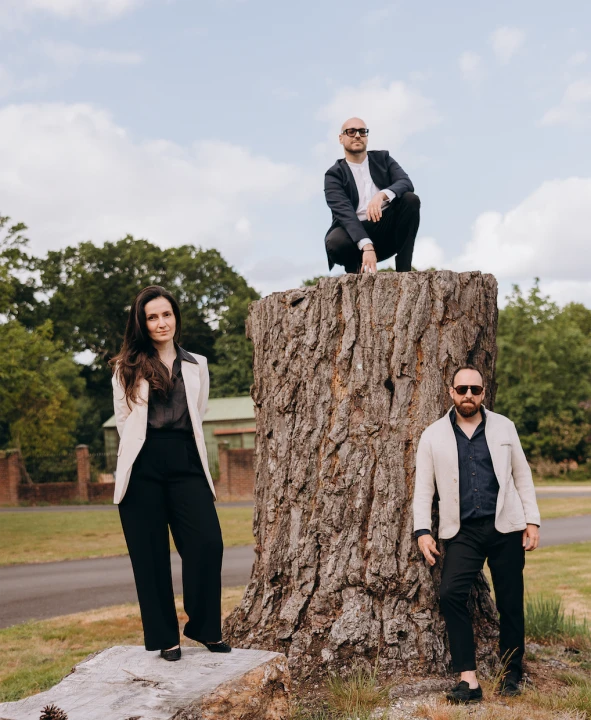
At the Monaco Yacht Show, a small stand carried a large message. We spoke with designers Amadei Collett about how it came together.
Walk the quays of the Monaco Yacht Show and you will find no shortage of ambitious design. Fewer stands, though, are built on goodwill. The Water Revolution Foundation (WRF) stand started from three bare white surfaces and no budget and became a space where leather, marble, 3D-printed forms and the sea itself shared one visual language.
Behind it were Amadei Collett, who designed the stand and coordinated the contributions of the co-makers involved, in collaboration with Smart Interiors Horizon.
PressMare: What did you contribute to the WRF stand at the Monaco Yacht Show, and what expertise did you bring to its creation?
AC: The result grew from a principle we value deeply: when people put their knowledge at the service of a shared ambition, a small space can carry a much larger message.
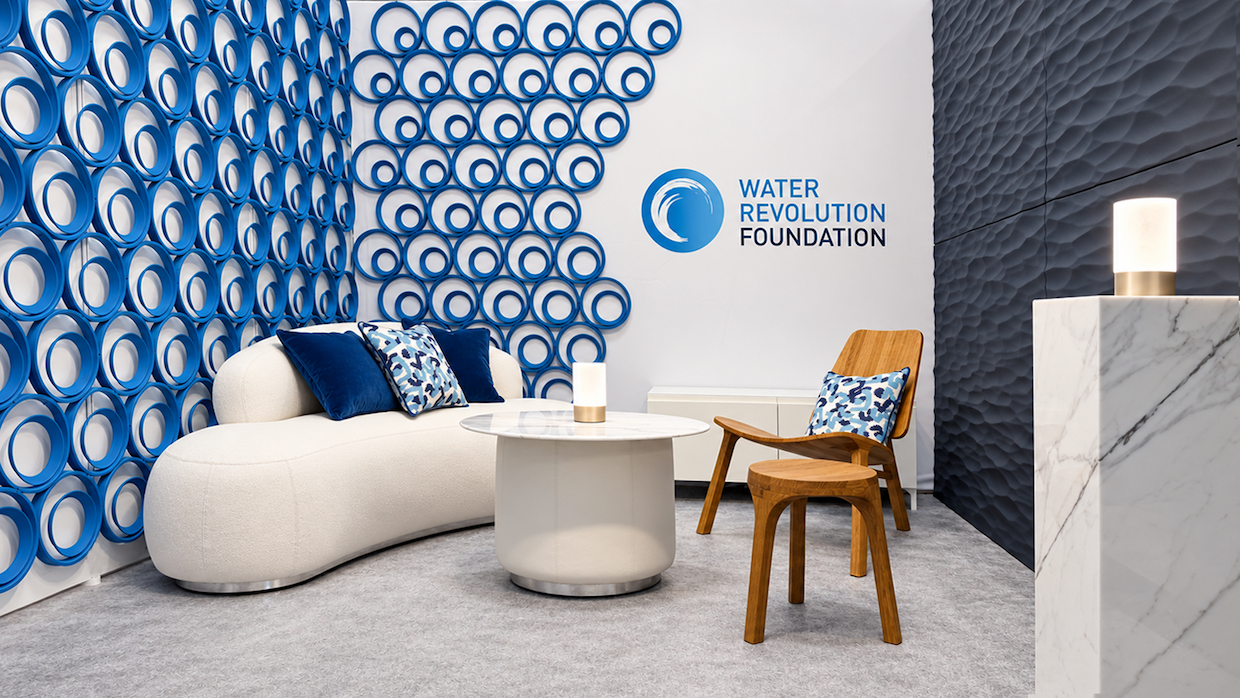
Amadei Collett developed the design for Water Revolution Foundation’s stand and coordinated the co-makers’ contributions, bringing their materials, products and expertise into one coherent space. We translated WRF’s identity and mission into a welcoming environment, ensuring it could be engineered, produced and installed within the available time and resources.
The challenge was to transform three white surfaces into a distinctive setting worthy of the Monaco Yacht Show, within a few weeks and no budget. The forward-looking design drew on technologically advanced companies committed to more responsible practices.
Our experience in superyacht design and high-end interiors helped us make every square metre count, integrate technical requirements and create a consistent visual language. Together with our partners, we created a space that brought WRF’s identity to life, invited visitors to connect with its mission, and celebrated every co-maker’s expertise, a shared achievement that shows what is possible when talent and purpose come together.
PM: How did working with Smart Interiors Horizon and the other partners influence your contribution? Can you share a concrete example of something made possible through this collaboration?
AC: Initially, we were not entirely confident about the project’s feasibility. The constraints were significant and the timeframe exceptionally tight. The turning point came at the first kick-off meeting, when Smart Interiors Horizon’s enthusiasm and ability to bring together a committed, proactive group of partners convinced us that the ambition was achievable.
The stand became a true expression of this collective effort. Romital was a perfect example, producing a bespoke sofa to our design using leather supplied by fellow co-maker Prodital. Their contribution went further, collaborating with Foglizzo on the leather bas-relief partition, providing the structural panels and support system under our design direction. This spirit of cooperation brought upholsterers, joiners, marble and leather specialists into a seamless creative and technical dialogue.
Much like a fast-paced yacht refit, the process evolved around available materials, expertise and production timelines, with solutions continuously refined through drawings, samples and shared technical knowledge.
Ultimately, what made the difference was a willingness to set individual interests aside in favour of a shared ambition. Everyone contributed beyond their immediate responsibilities, without financial return, proving that genuine collaboration is not simply a way of working, but a powerful design resource.
PM: How did you translate WRF’s mission into a physical space while bringing the different partners’ contributions together into one coherent design?
AC: This was perhaps the project’s most demanding challenge: bringing WRF’s identity and mission together with its partners’ contributions and sustainability credentials within a short timeframe and limited resources. Every decision had to be meaningful yet practical.
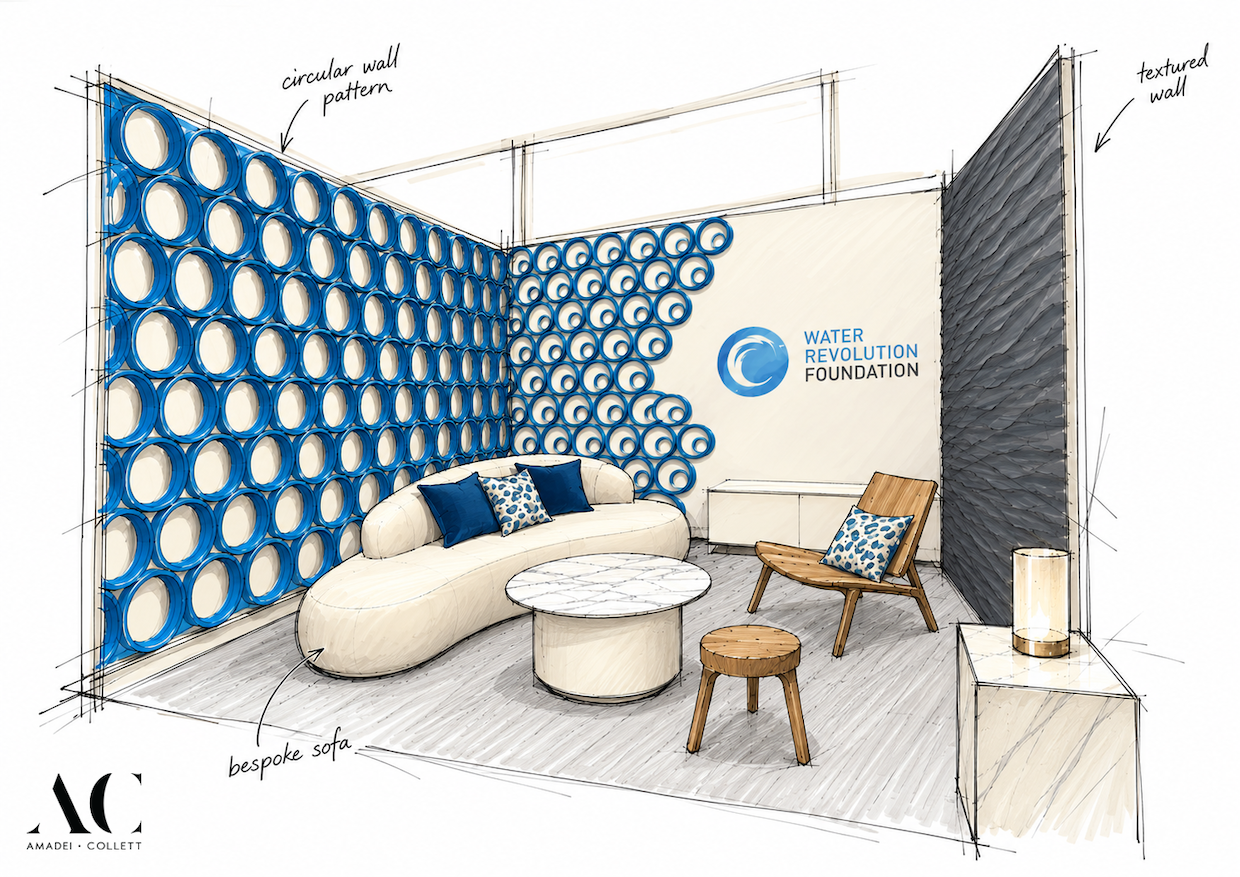
We began with two ideas: water and the collective energy behind the foundation’s work. The sea was a natural point of reference, the environment connecting everyone in yachting and giving WRF’s mission its purpose. Its movement and continuity provided a language for uniting diverse materials and contributions.
We evoked the sea’s ripples through a low-relief leather panel set beside a white canvas bearing the WRF logo. Their interplay of texture, light and stillness created a quiet connection to the water.
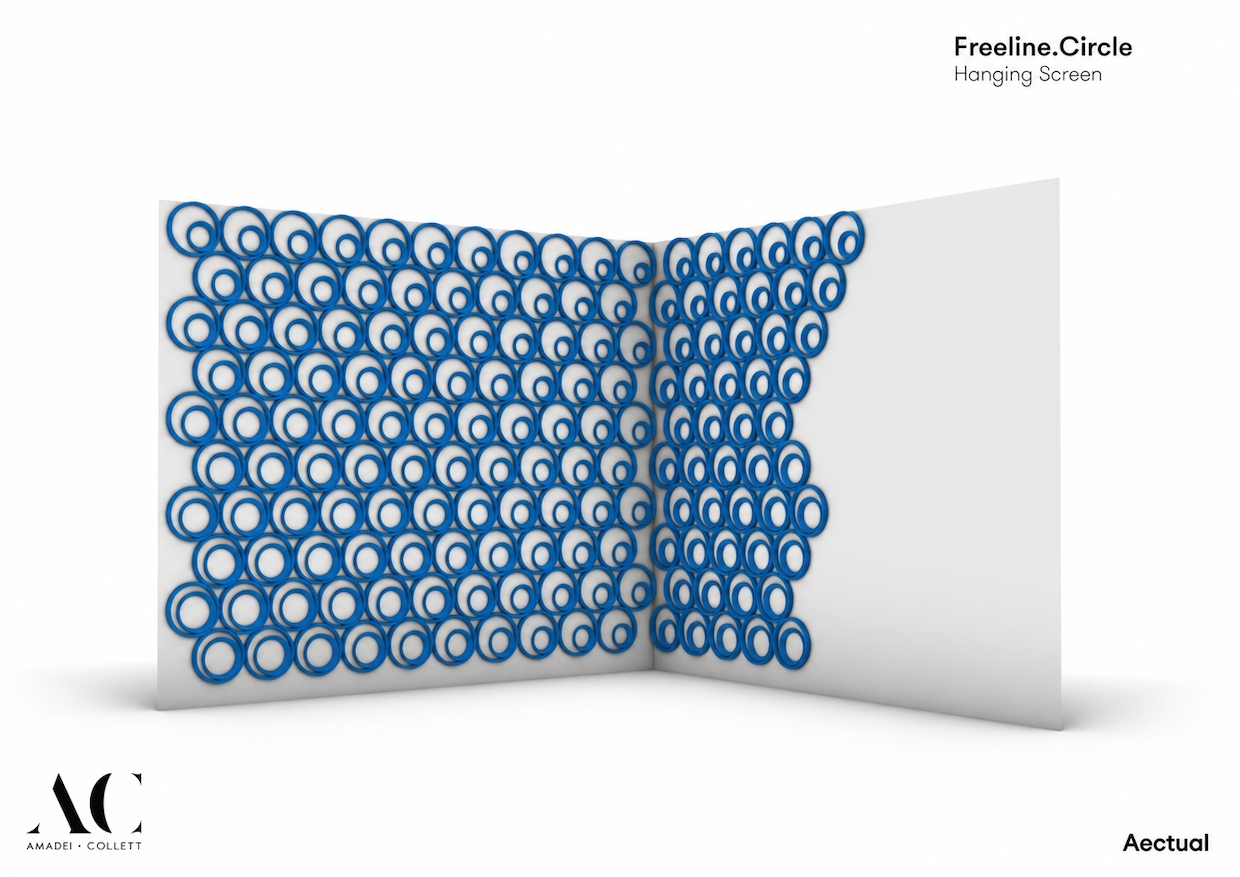
Circles of varying sizes represented the companies contributing to WRF’s mission. Suggesting oxygen bubbles, they expressed each partner’s vital energy. 3D-printed in a biocompatible material, the deliberately incomplete pattern reflected work still unfolding and left space for others to join.
A reminder that every visitor has a place in this shared effort, and something meaningful to contribute.
Together, these elements expressed WRF and Smart Interiors Horizon’s commitment to guiding yachting towards a more responsible future.
PM: What do you hope this project will encourage the yachting industry to do differently when designing and sourcing interiors?
AC: We hope to see a yachting industry built on closer collaboration, greater openness and genuine cross-pollination of expertise. Other sectors, particularly automotive and aerospace demonstrate how sharing knowledge and integrating different capabilities can accelerate innovation and create value.
Leading Northern European shipyards, such as Oceanco, are already embracing this philosophy through the concept of “co-makers”: companies contributing to a shared ambition, sometimes even across traditional competitive boundaries. We believe this mindset should extend further, encouraging major industry players to welcome fresh perspectives, build synergies and develop solutions together, including with competitors.
Opening yachting to expertise from other industries offers equally exciting opportunities. Bringing makers into the design process from the outset allows new materials, manufacturing techniques and engineering solutions to inform creativity, streamline development and unlock possibilities that might otherwise remain unexplored, while ensuring their suitability for the marine environment.
Ultimately, collaboration should not dilute individual creativity but amplify it. The future lies in an industry where knowledge moves more freely, competition coexists with cooperation, and innovation, responsible choices and commercial value grow together.
Rebecca Gabbi
©PressMare - All rights reserved
Source: Original article on PressMare ↗