


Education, research and industry: in Olbia, the future of nautical and aeronautical skills
The key theme that emerged from the talk “Innovation in university education for the modernization and growth of the local economy in the nautical and aeronautical sectors”, held during the third day of the Sardinia Boat Show 2026, was the development of a true territorial growth project built around education, research, and industry. The discussion was moderated by Andrea Gianotti, Head of the Il Sole 24 Ore Research Center.
The panel explored the evolution of the university educational offering developed within the territory, with particular focus on programs connected to the nautical and aeronautical supply chains. Alongside the already active Bachelor’s degree in Naval Engineering, the new Master’s degree in Nautical Engineering and the professional degree program in Electrical and Aeronautical Industrial Technologies were presented, following their introduction during the Milan Design Week in recent weeks.
At the center of the discussion was the topic of human capital, considered the main strategic element for supporting the growth of Sardinia’s regional nautical sector and strengthening the island’s positioning in national and international markets.
Among the contributions most closely linked to the origins of the university project in Olbia was that of the Mayor of Olbia, Settimo Nizzi, who retraced the early stages of the academic settlement in the city, made possible in part through the use of airport facilities as educational spaces. A choice that represented the starting point of the current development path for higher education in the area.
On the relationship between knowledge, employment, and industrial growth, Aldo Carta, General Director of CIPNES Gallura and President of UniOlbia, described the growth of human capital as one of the major challenges facing the territory. Carta highlighted the need to simultaneously strengthen research, internationalization, and education, guiding Sardinia toward an economic model increasingly based on skills and the ability to attract industrial investment. During his speech, he also emphasized the importance of placing knowledge at the service of employment and productive development.
The Rector of the Università degli Studi di Cagliari, Francesco Mola, illustrated the Sardinian model of collaboration between universities, businesses, and local territories, based on the co-design of educational programs starting from the real economic vocations of the region.
On the topic of technology transfer, Matteo Lorito, Rector of the Università degli Studi di Napoli Federico II, focused on the role of universities in facilitating the transfer of expertise from research to the industrial and productive system, thereby contributing to territorial development processes.
Antonio Garofalo, Rector of the Università degli Studi di Napoli Parthenope, also highlighted the strategic value of university education in building a supply chain of knowledge and expertise capable of supporting the national system, with particular attention to sustainability issues.
During the panel, Gianni Lettieri, President and CEO of Atitech S.p.A., a company operating maintenance hubs also in Olbia, spoke about the role of skills in industrial development and the need to create highly specialized professionals to support productive growth and the economic extension of the tourism season within the territory.
An international perspective on the territory’s future was also provided by Silvio Pippobello, CEO of Geasar S.p.A. and Sogeaal S.p.A., who announced the launch, scheduled for May 21, of the new direct New York–Olbia route operated by Delta Air Lines. The initiative was described as a strategic step for the international opening of the territory and symbolically connected to the university and infrastructure development path undertaken over the last twenty years.
The discussion also featured the participation of Vice President of the Regione Sardegna Giuseppe Meloni, who explored the Region’s role in strengthening the educational supply chain and policies aimed at encouraging young graduates to remain in the territory, while also underlining the need to make Sardinia increasingly attractive to students and skilled professionals coming from outside the island.
Articoli Correlati
11 November 2026
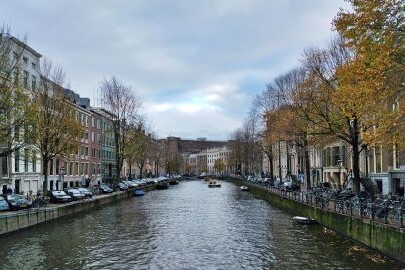
Sardinia at METSTRADE in Amsterdam with an innovative biomethanol project
The Autonomous Region of Sardinia and CIPNES Gallura will take part in METSTRADE in Amsterdam,…
10 November 2026
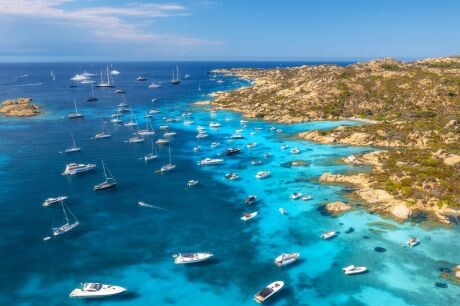
Superyachts in Gallura: vessel numbers rise as the international season expands
3,417 unique vessels between June and September 2026, up 9.7% on 2025 and 27% on 2024: these are…
6 November 2026
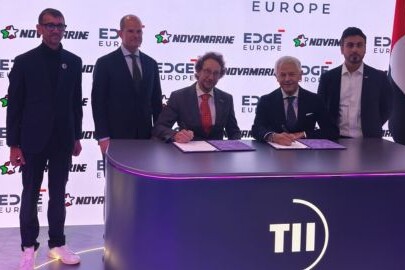
Novamarine and EDGE Europe: new autonomous navigation projects from Olbia
Gallura’s boatbuilding industry is expanding its engagement with autonomous navigation…